We remotely interviewed Matt and Steve, founders of Shared Horology, a micro brand producing amazing, unique watches with enamelled dials.
Can you introduce yourselves? What brings you into the world of horology?
Matt
My name is Matt. I am from a city outside Toronto, Canada. I have had an interest in watches since I was a kid and started collecting about 11 years ago. I studied engineering for years at University which ignited my passion for watchmaking. The more interested I got in watches, the more I appreciated the handmade and unique aspects that go into the design.
I am obsessed with things that cannot easily be scaled up in production. Anglage, cloisonné, hand painting and hand engraving. For me, this is what makes a watch so special.
Knowing someone dedicated a significant amount of real time and energy to create something truly amazing. Something a machine cannot replicate. To me, the imperfections of something handmade are simply what make a watch so perfect.
Steve
My name is Steve, and I'm from New York City, where I work in finance. I was first introduced to horology in 2017 when I got married. My wedding gift was a Rolex Datejust 41 when I became obsessed with watches.
My journey into horology began with Rolex, Omega and other mainstream brands. As my interest and knowledge grew, so did my curiosity about the broader watchmaking world. Particularly microbrands and independent watchmakers. I find a level of creativity and craftsmanship here that is difficult to find elsewhere.
Over the years, I've also been part of several major WhatsApp watch groups. We discuss watches and horology on a daily basis there. Those communities have given me the opportunity to learn from other passionate collectors. I connect with people who share the same appreciation for exceptional watchmaking.
What is Shared Horology about?
Matt
Shared Horology began as a small project between myself and Steve. We tried to create our own cloisonné dial watch at a price we could both afford. The original idea goes back many years. I had originally begun the project on my own. Then I came to the conclusion that it was not financially feasible. I did not give up.
Over the next few years, I bought many vintage watches to take apart and see how thick of a dial they could take. Eventually, I found out Steve had also been looking to do the same thing. We put our minds together and said we are making this happen no matter what.
The biggest hurdle in starting a new cloisonné dial watch project is the case. You need something that can accommodate the thick enamel dial. Unfortunately, that means creating our own case. Then meeting MOQ requirements to have it made.
The only realistic way was for us to take our idea and present it to some close friends of ours who are equally watch-obsessed. After convincing ten friends this idea was doable, we became able to pay the upfront R&D costs for the watch.
Steve
Shared Horology was an idea that came to life in January 2026. My friend Matt and I have known each other for years through a few watch communities. We discovered our shared interest in métiers d'art watches. Particularly the craft of cloisonné enamel.
Many of the cloisonné watches we admired were well beyond our price range. We spent years talking about how we could create one for ourselves. We even tried sourcing vintage watch cases that could accommodate the thick, beautifully crafted cloisonné enamel dials.
Unfortunately, every attempt ended in failure. Those conversations ultimately planted the seed for what would become Shared Horology.
What makes Shared Horology watches different, unusual, special?
Our watches are unique in the way all other métiers d'art watches are all different from each other. No two watches are ever alike, even if the design is the same.
We try to only work with somewhat unknown artists around the world. We partner with some of the top case and hand suppliers. We are proud that the significant majority of our watch production is from around the world.
Shared Horology takes an unusual approach to watchmaking. It puts the work of the artisan ahead of the brand. We don't build watches around corporate identity, marketing, retail presence, and commercial demands.
Shared Horology works directly with exceptional independent artisans to present the purest expression of their craft. There is no intrusive branding or unnecessary visual language competing for attention. The case and hands are deliberately restrained to frame the work, not overshadow it.
The philosophy extends to pricing, too. We remove layers of corporate overhead, traditional retail, and marketing.
We aim to direct more of the collector's spend towards what actually makes the watch special: exceptional craftsmanship.
Shared Horology is less about putting a brand on a watchmaker's work. It's more about putting the watchmaker's work in the hands of the collector.
What are the specific details of this watch?
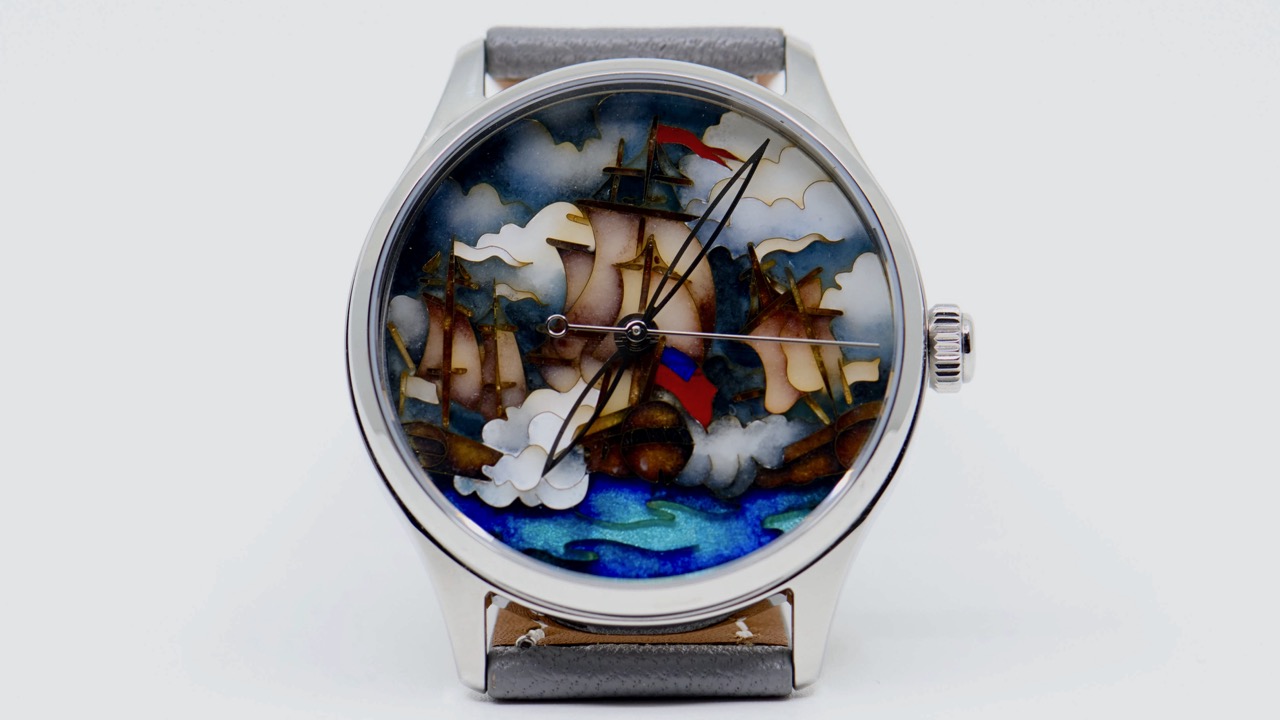
The Maîtrise-meaning "Mastery" is our debut timepiece. It's the clearest expression of what Shared Horology is trying to accomplish. It is a series of one-of-one cloisonné enamel commissions.
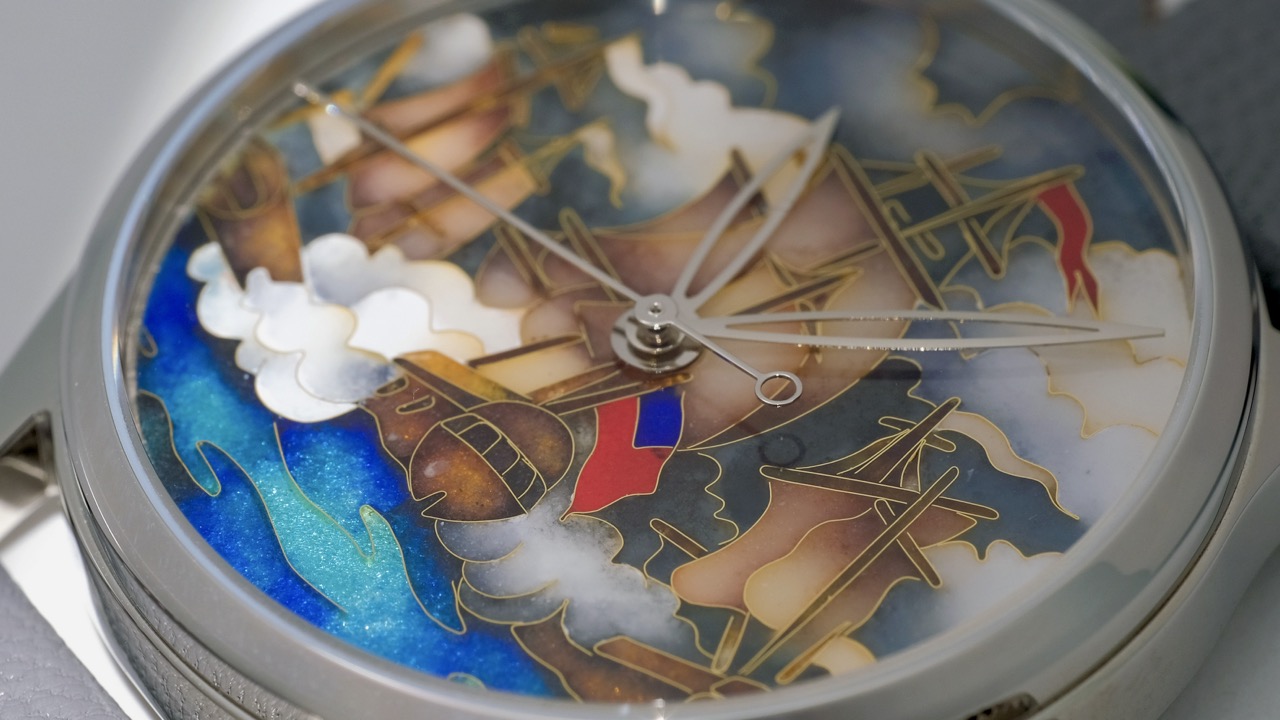
Created in collaboration with an exceptional master enameller in Georgia. It's a country with a remarkable and long-standing tradition of fine enamelling.
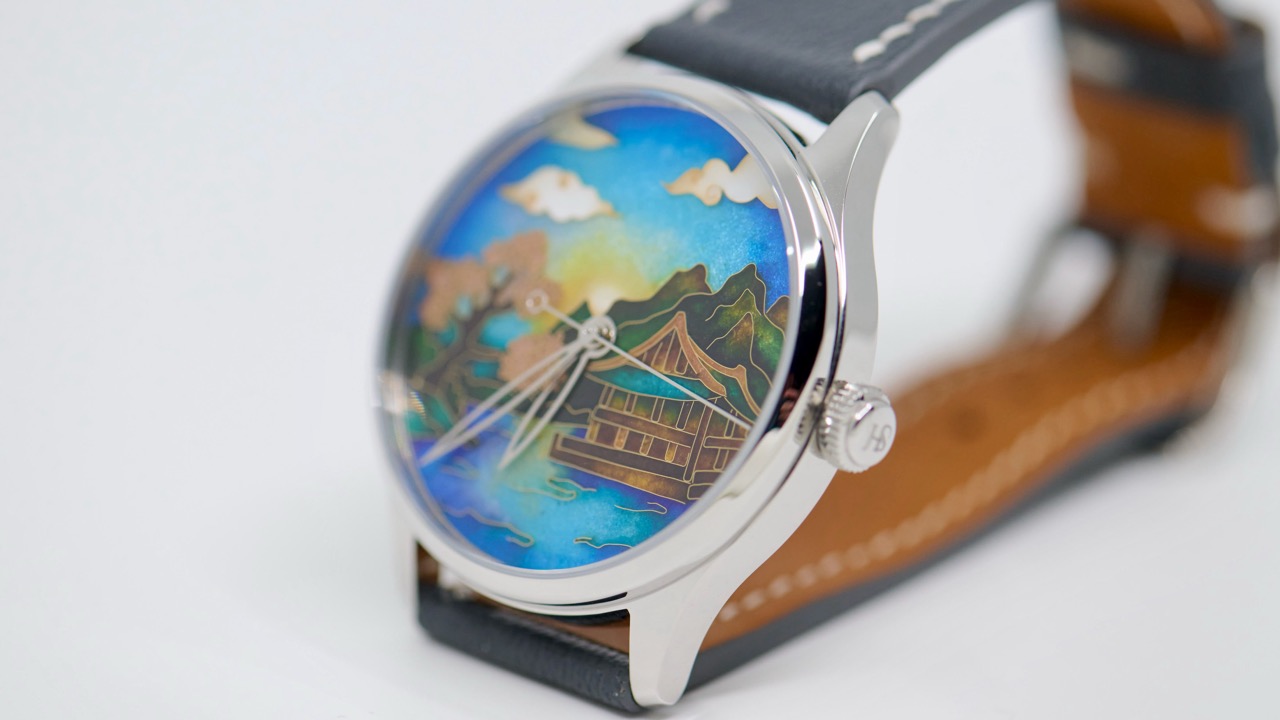
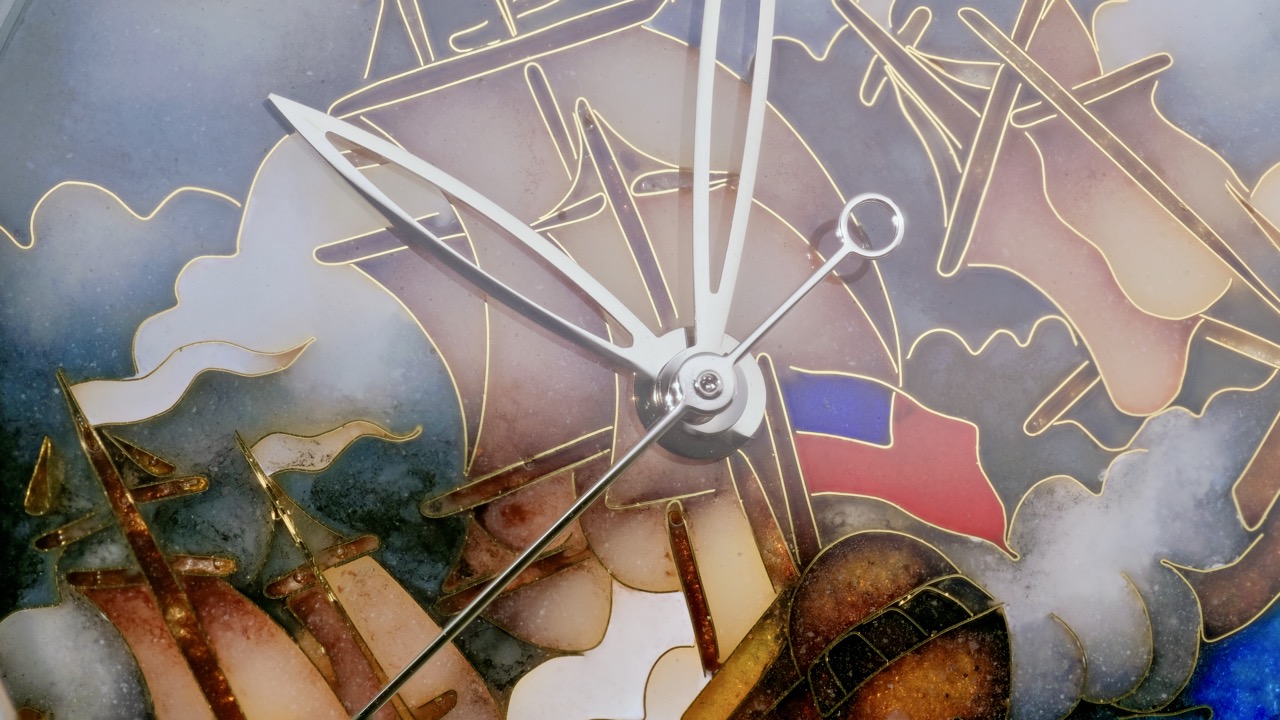
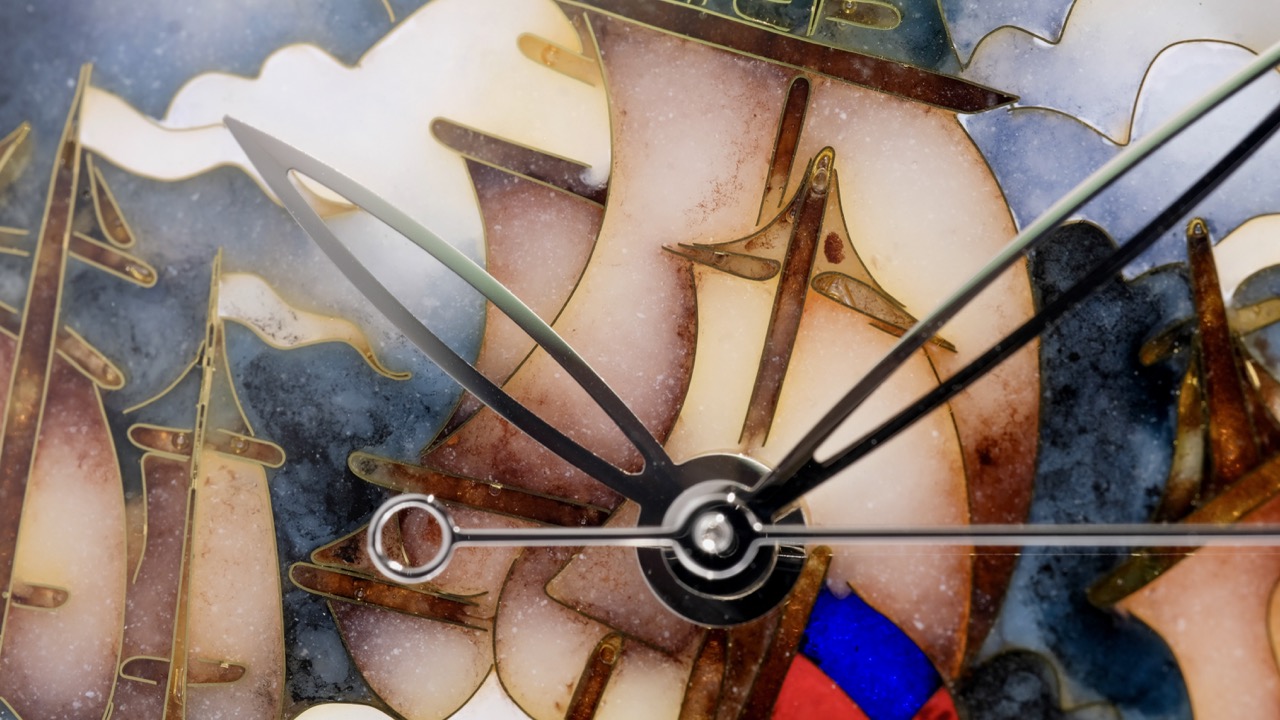
At the heart of the Maîtrise is the dial. It does utilise enamel simply as a decorative element. The entire watch showcases the enameller's craft and artistic vision. Each dial is unique for each collector, so no two pieces are exactly alike.
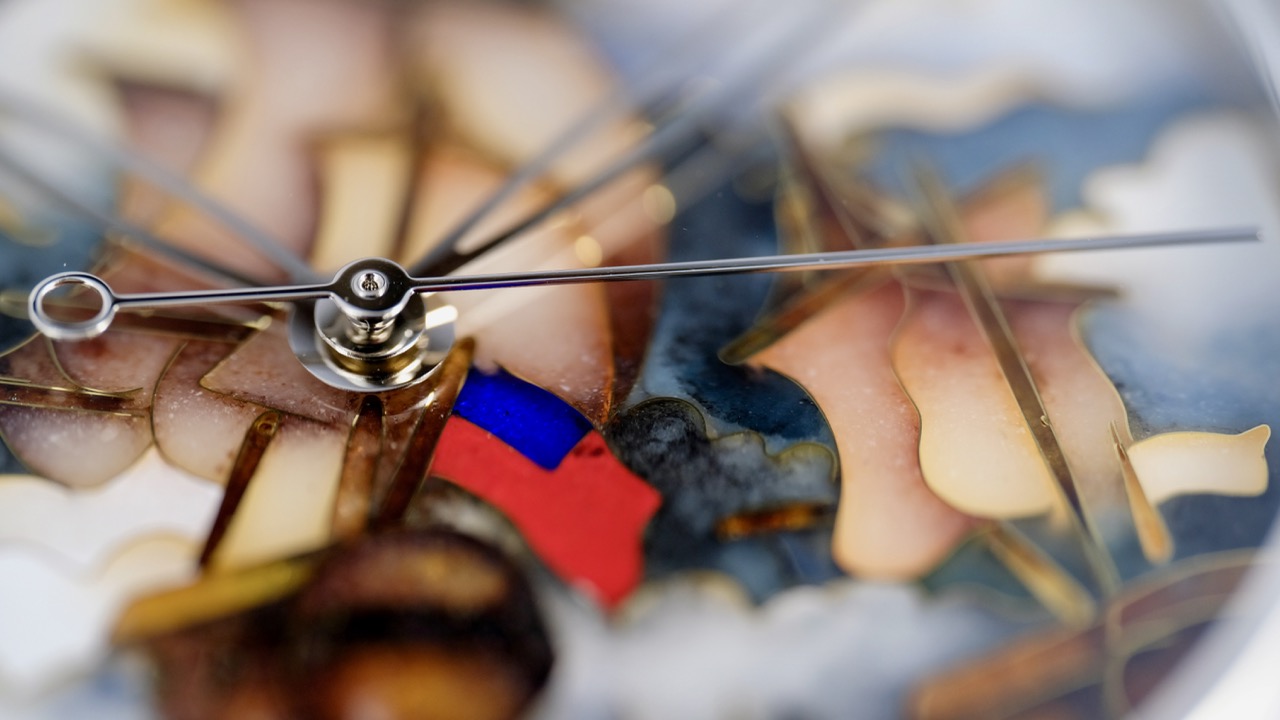
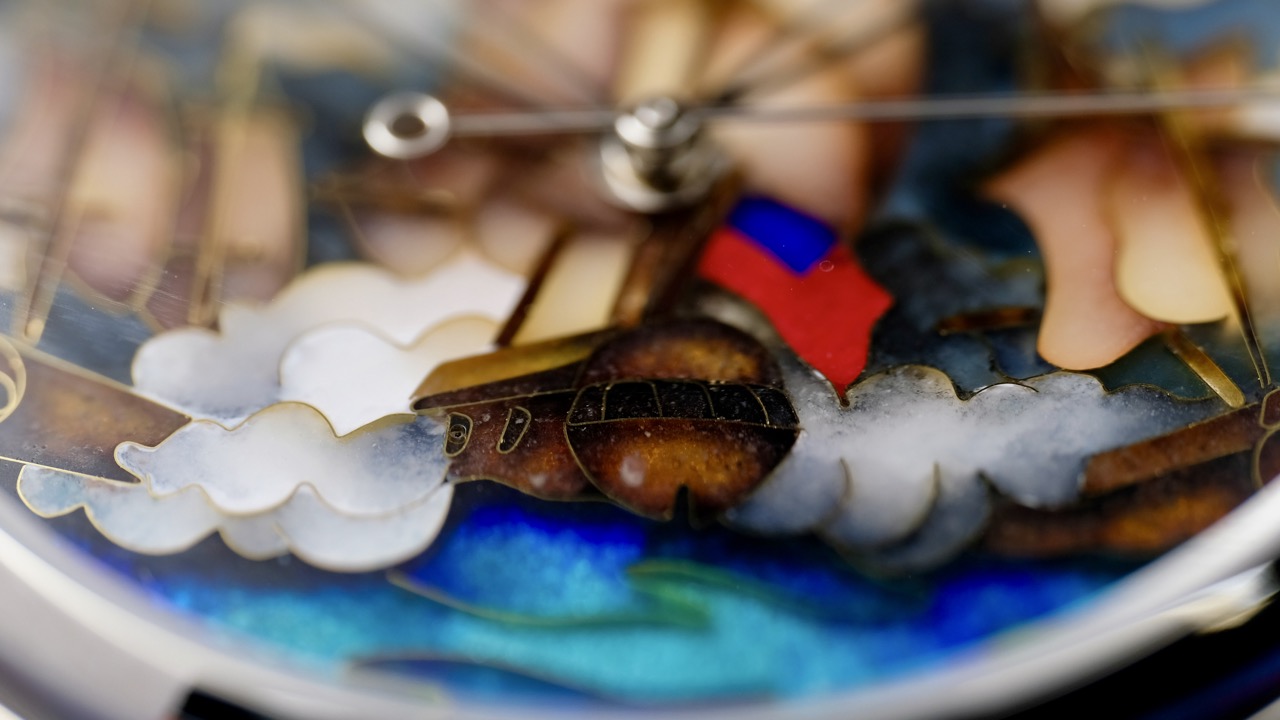
The technique itself is incredibly labour-intensive. The artist begins by creating the composition using extremely fine gold wire. It is shaped by hand and used to form the individual compartments or cloisons of the design.
These tiny cells are then filled with enamel powder. It has different colours and shades carefully selected to create the desired image.
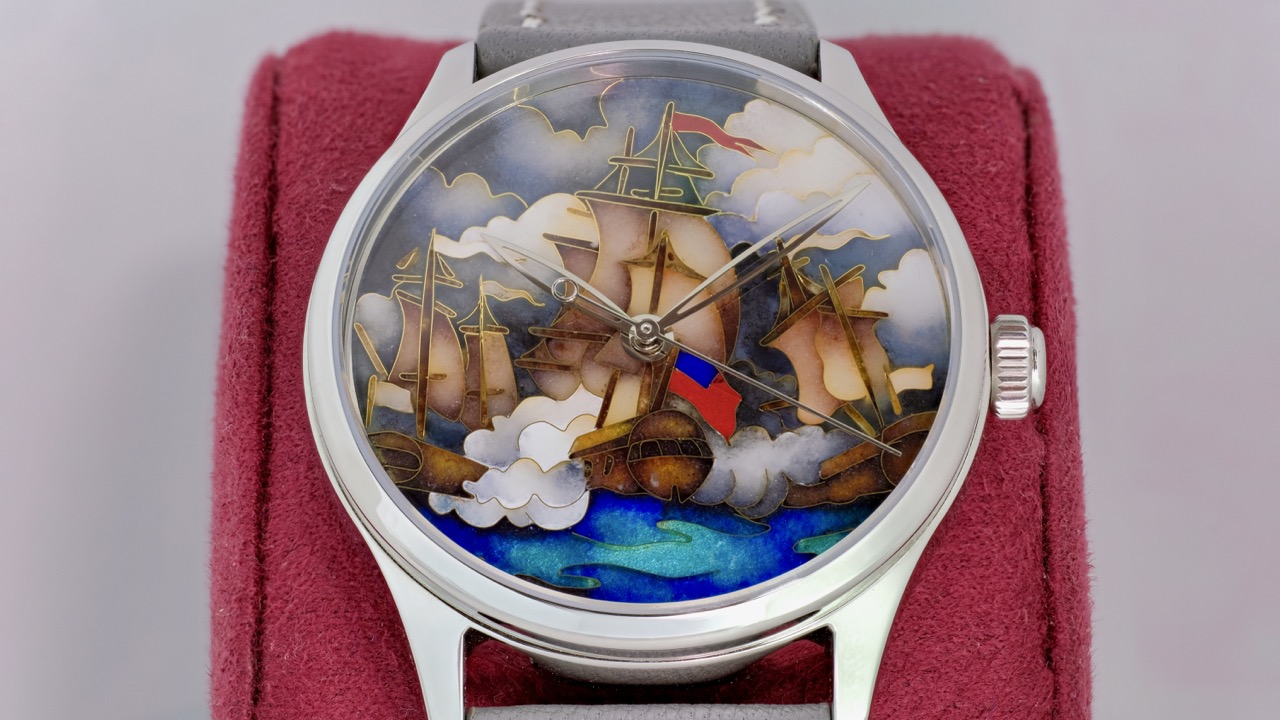
What makes this work especially remarkable is the artist's mastery of ombré. Instead of relying on flat blocks of colour, subtle gradients are created by carefully varying the mixture and application of the enamel powder within these incredibly small gold-wire compartments.
Once fired, the enamel develops its characteristic depth and luminosity. Achieving the intended gradient requires an extraordinary amount of precision and control.
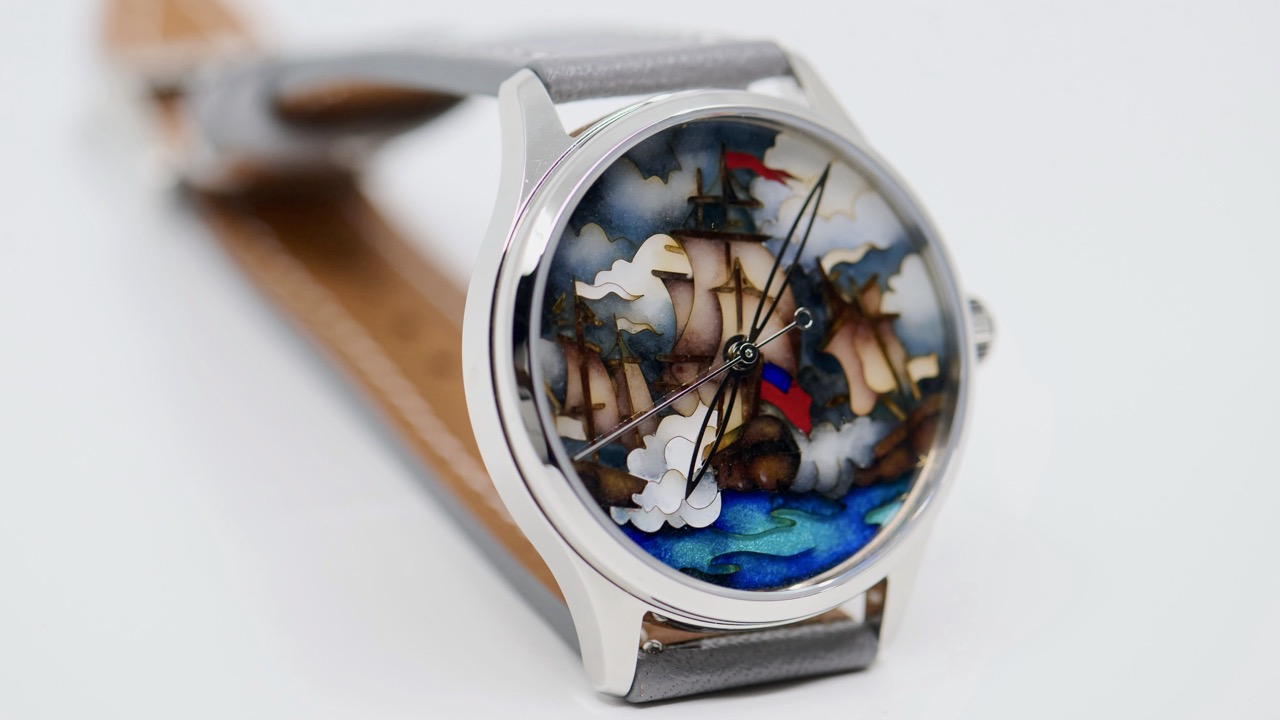
You can see this most clearly in the figurative compositions. A bird's individual feather or a ship's sail isn't simply represented by a single colour. It is rendered through a shimmering transition of tones.
This creates the impression of depth, light, and movement. Consider the scale of these elements and the fact that they get created by hand inside tiny cloisonné cells. The level of craftsmanship is quite extraordinary.
Each dial is a unique work of art. The master enameller is given the freedom to pursue the composition they feel. There isn't a predetermined collection of identical references being produced in volume. Instead, each Maîtrise is a bespoke commission created for one collector.
We intentionally kept the rest of the watch restrained. The dial is presented in a 39mm case, sized to provide a balanced presence on the wrist. It keeps the focus firmly on the artwork. The case and hands are there to frame the dial rather than compete with it.
Ultimately, the Maîtrise isn't about adding a piece of cloisonné to a watch. The watch is built around the cloisonné. The movement, case, and hands serve as the setting. The dial and the extraordinary human skill required to create it is the centrepiece.
What is the case made out of?
The case was designed and engineered in collaboration with a highly renowned case manufacturer in Germany. It is crafted from 316L stainless steel and finished with a fully polished surface.
This gives the watch a clean and understated appearance that keeps the focus on the dial.
The case is also rated to 5 ATM, providing practical water resistance for everyday wear.
What mechanism is inside?
Inside the case is a top-grade Sellita SW300 automatic movement. It's finished and decorated specifically for the Maîtrise.
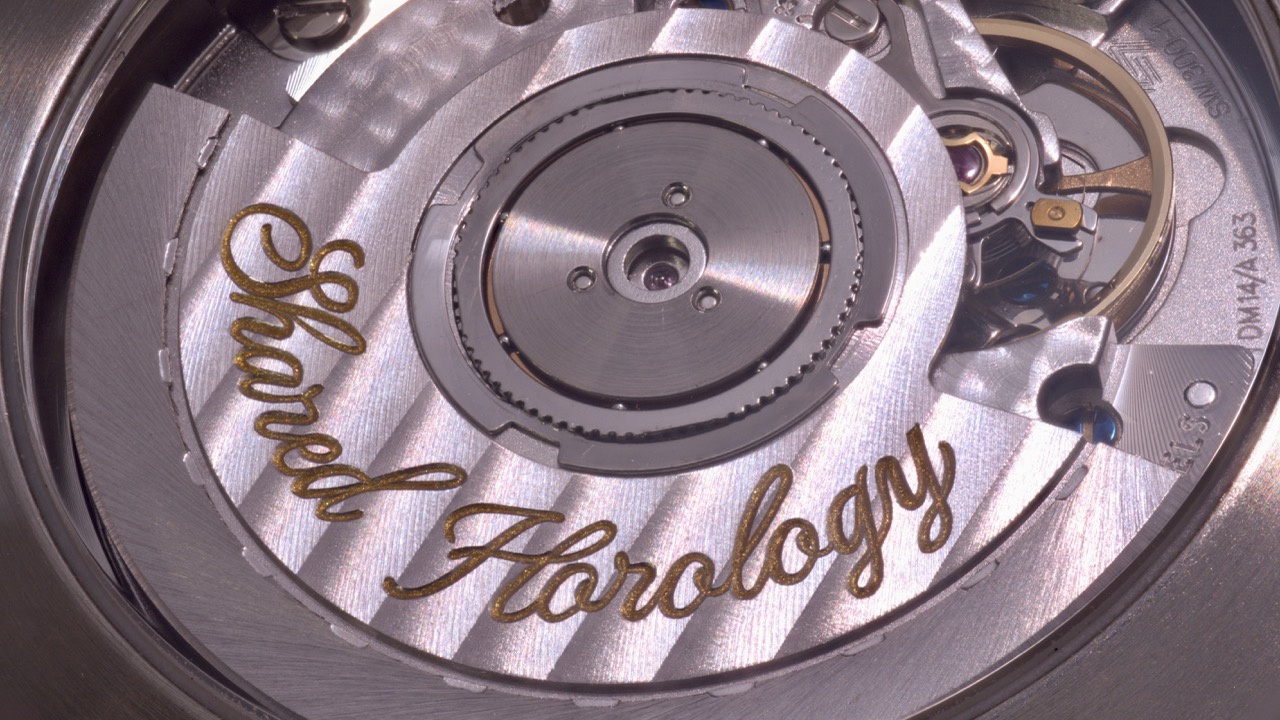
The main plate features perlage, while the movement is fitted with heat-blued screws. The rotor is decorated with a Côtes de Genève finish. The Shared Horology name is hand-engraved onto the rotor and highlighted with gold-coloured inlays.
What aspect of this watch takes the most time to execute on?
In real watchmaking hours, the dial is by far the most demanding. It can take days just to do the wire work for the cloisonné. Then further days painting it with the enamel and firing it in the kiln.
If at any point in this process something goes wrong, the dial must be scrapped and started over. Making the dial is one thing, but designing the artwork can also take a significant amount of time.
It takes a lot of attention to detail to understand what will or will not look good in cloisonné form. Things must be simplified in the design. Generally, focusing the design on something dramatic or close-up creates an interesting watch dial.
We spent three months deciding on the best layout and colours that would translate well into cloisonné for our ship battle watch design.
Where do you see the brand go in the next 3-4 years from now?
I like to think we are just getting started. This first series started as a project, but we quickly realised we might have something to offer here for other watch enthusiasts.
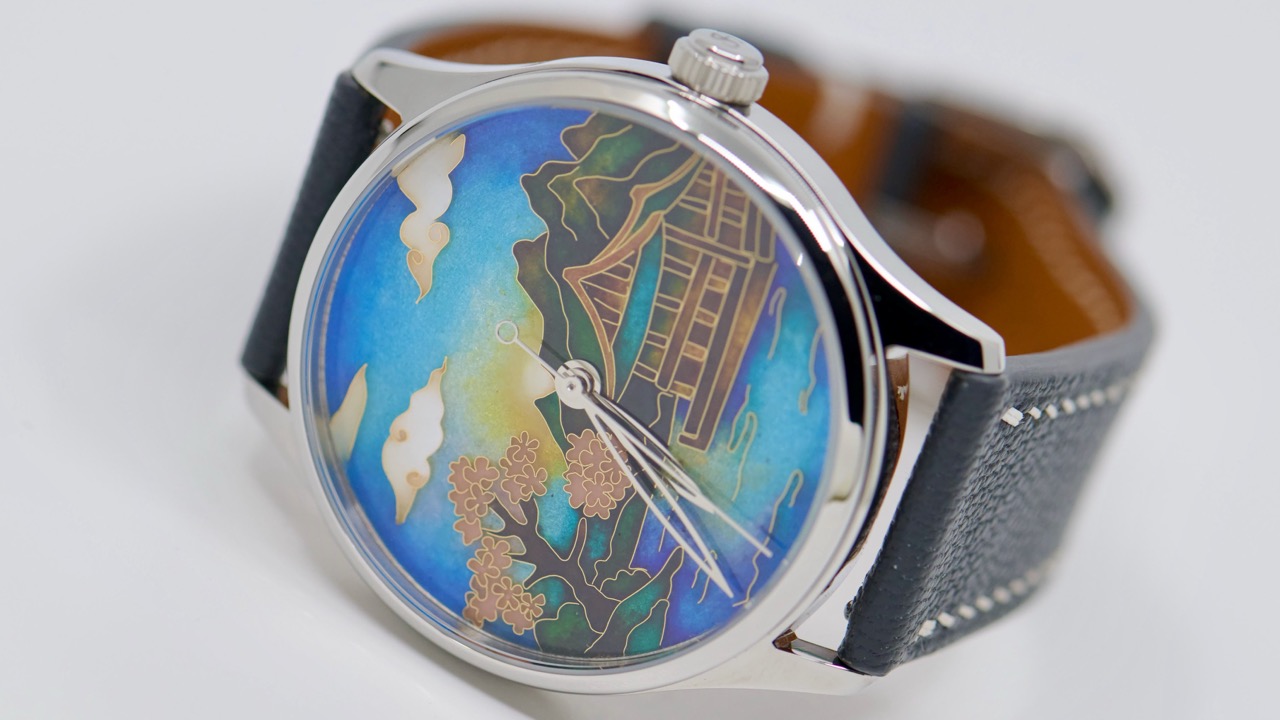
We both have so many ideas that we hope to create over the next few years into some interesting watches. Not just different dial designs, but different dial mediums and higher end movement options. Currently we are looking at various high-end movement manufacturers to test a future project with.
How is the wearing experience and emotions of wearing the watch?
It's hard to describe what it's like to wear a cloisonné dial watch. Especially one with a personal meaning to you. It gives you the extra smile in your day when you look down and see the beautiful artwork and think of the story behind it.
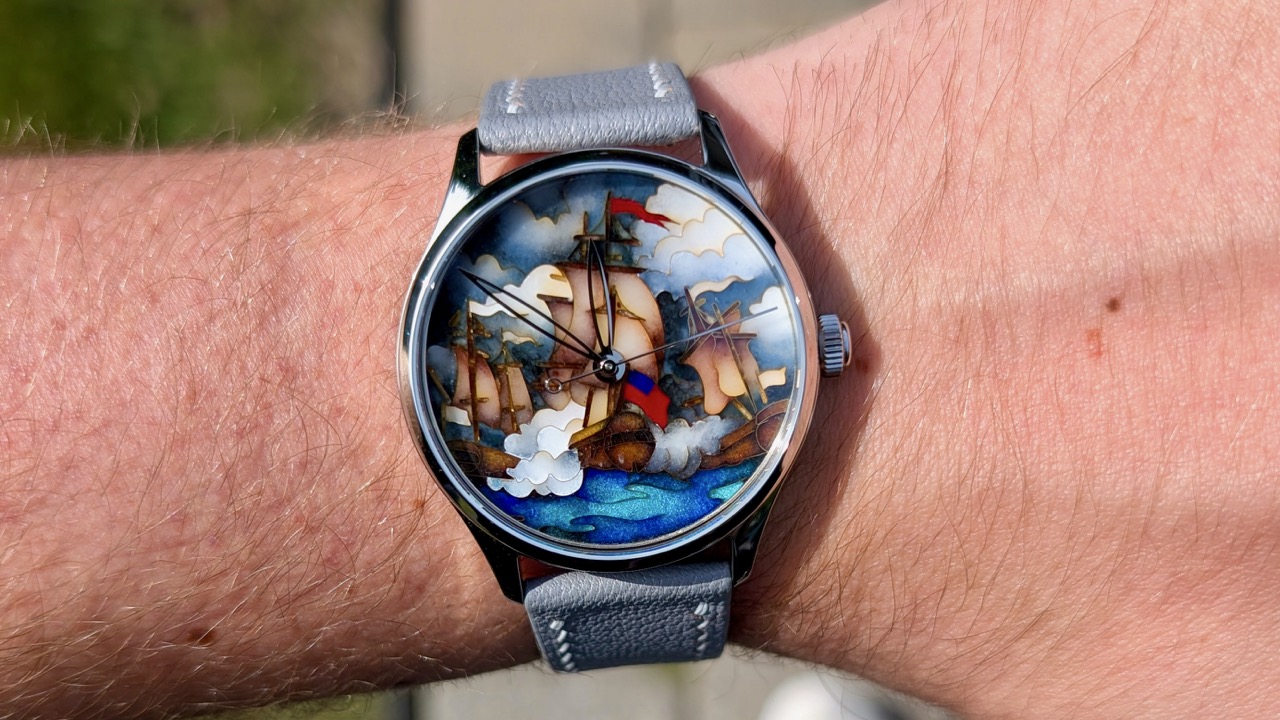
It certainly is a conversation starter for anyone even remotely interested in watches. Emotionally, these watches function as a piece of wearable, personalised art.
What is the process like of getting one of these pieces made? How long does it take? How does the client provide the requirements?
Currently, we are finishing the assembly and delivering our series 1 collection to the first customers. We take orders in small batches at a time, as the parts take a while to create.
We will be taking orders for a small second batch in the next month. Due to the handmade nature of our watch dials, they cannot be mass produced, so each batch takes some time to complete. We also like to allow for extra time for our artisans in case something goes wrong, like a dial needing to be re-made.
Why is owning a piece unique watch important?
A piece unique watch is a fantastic way to bring a personal story, memory, and connection to something you get to enjoy every time you put it on your wrist.
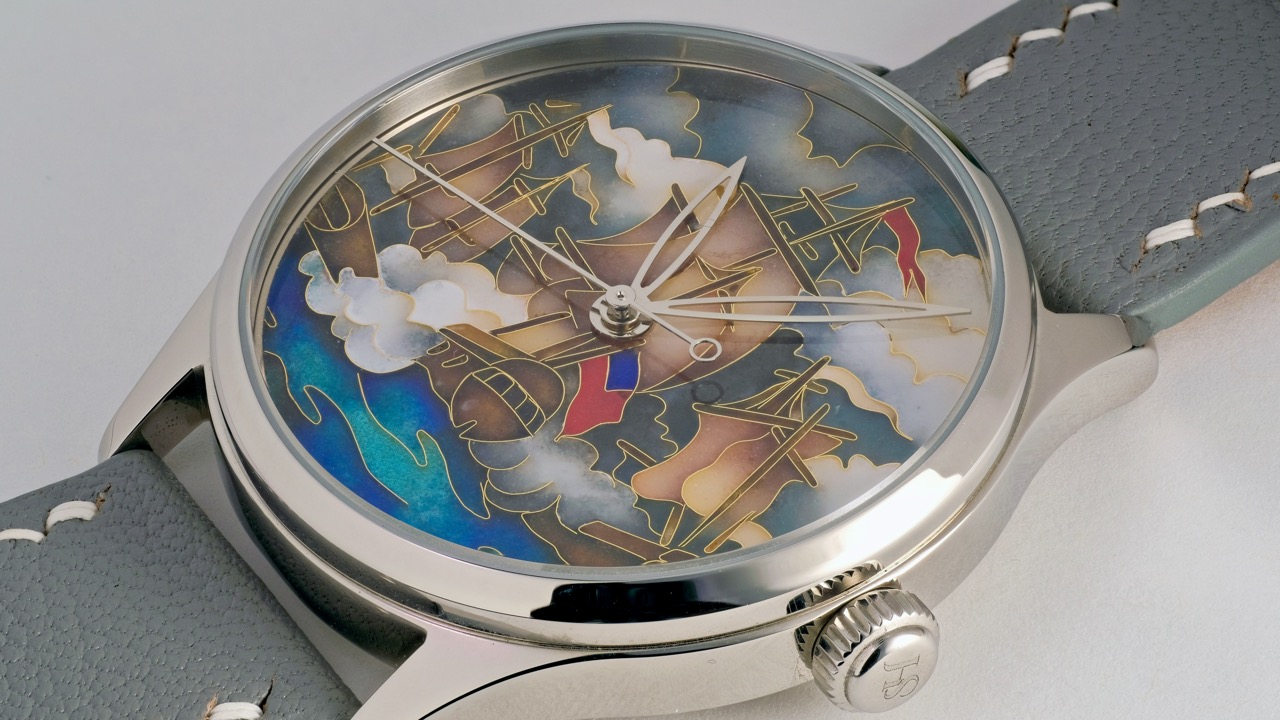
There is a special charm knowing you have something truly one of a kind, that will never ever be found again.
Who are the artisans and artists behind the watch?
Our main artisan is a fantastic enamel artist from Georgia, named Miranda. We went through many different artists. The moment we saw the work Miranda was achieving, we both knew she was something special. Her ability to create ombré with the enamel paint is a tremendous skill in the cloisonné world.
Technical specs
- Dial: Handmade 24k gold cloisonné wire filled with enamel on a pure silver base
- Case Diameter: 38.8mm
- Thickness (incl crystal): 9.1mm
- Lug to Lug: 45.4mm
- Lug Width: 20mm
- Case Material: 316L stainless steel
- Movement: Top-grade Sellita SW300 modified to brand specification (hand-engraved rotor logo, Côtes de Genève)
- Power Reserve: Not specified
- Crystal: Flat sapphire
- Water Resistance: 5 ATM
- Strap: Grey Alran Chèvre goat leather (sourced from Alran S.A.S. Tannery in France, handmade bespoke by a strap artisan in Vietnam)
Dislaimer: We don't use AI for authoring any of our visual or written artwork. Everything you find in Happy Horologists Magazine is and will be human made.